AMS 
Logo

American Meteor Society -- Fireball Reporting Form


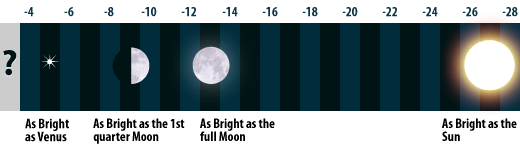
This form is intended to be easy to fill out for anyone who has seen a fireball. Your report is important, it alerts us to potentially scientifically significant events that occur, and contributes to the general database of knowledge about meteors. Please provide as much information as you can, any items you cannot fill in, leave blank. We will contact you if we have any follow-up questions. Note that the information you provide will be shared only with scientists and scientific organizations specializing in the study of fireballs and related phenomena. Please limit your reports to those meteors brighter than magnitude -4. This is brighter than the planet Venus, which is now visible as a bright object low in the west after sunset. Also note that a summary of your report will appear in the current fireball table on the AMS website. This will include your name and location (town or city, not street address). If you wish for more privacy we suggest you only provide your first name.

Contact Information

Observer's name (required):  
Observer's e-mail (required):  
Address:  
Phone (home):   Phone (work):  

Date of Occurrence

Please enter what we call a "double date", i.e. if you saw it before midnight on the evening of August 11th, the double date would be August 11-12. If you saw it early on the morning of December 14th, the double date would be December 13-14. This avoids ambiguities in what day it happened. Please include the year.
Date (required):  

Time of Occurrence

Time (required): AM PM 24 hour clock

Time Zone:
UTC Eastern Central Mountain Pacific Alaskan/Hawaiian
Other (Specify)

Standard time or daylight savings time? Standard Time Daylight Savings Time


Observation Location

Please give both the name of the location and geographic coordinates if at all possible. If you do not know them, describe the location in reference to nearby cities or towns, or prominent landmarks. Please do not use local or ambiguous descriptions such as highway markers or street names.
Location Name (required):  

If possible, provide the geographic coordinates of the observation location.
Latitude - deg, min, sec (or decimal form):  
Longitude - deg, min, sec (or decimal form):  


How bright was it?

Standard stellar magnitude scale:  

If you're not familiar with the stellar magnitude system, use one of the following:

Slightly brighter than Venus (Magnitude -5)
Brighter than Venus but dimmer than the 1st quarter moon (Magnitude -7 )
As bright as the 1st quarter moon (Magnitude -9)
Brighter than the 1st quarter but dimmer than the full moon (Magnitude -11)
As bright as the full moon (Magnitude -13)
Brighter than the full moon (Magnitude >-13)
As bright as the Sun (Magnitude -27)
Brighter than the Sun (Magnitude >-27)


How long did it last?

Duration (in seconds):  

If you're not sure, use one of the following estimations:

Less than 1 second
1 - 2 seconds
2 - 5 seconds
5 - 10 seconds
Greater than 10 seconds


What color was it?

Color:  

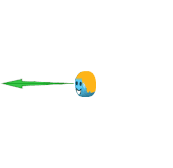
In what direction did you FIRST see it?

Initial Azimuth (bearing) in degrees:  
Azimuth Type:  Magnetic True

If you are not familiar with determining azimuths, indicate one of the following:

Directly overhead
North
Northeast
East
Southeast
South
Southwest
West
Northwest
I'm not sure

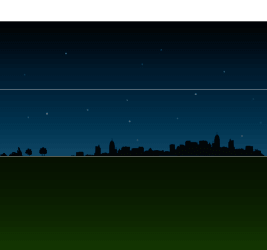
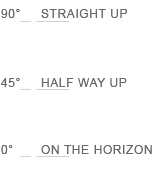
How far above the horizon was it when it first appeared? If it appeared above an elevated horizon, please estimate the height above where the true horizon would be.

Initial Altitude in degrees:  

In what direction did you LAST see it?

Final Azimuth (bearing) in degrees:  
Azimuth Type:  Magnetic True

If you are not familiar with determining azimuths, indicate one of the following:

Directly overhead
North
Northeast
East
Southeast
South
Southwest
West
Northwest
I'm not sure

How far above the horizon was it when it last appeared? If it appeared above an elevated horizon, please estimate the height above where the true horizon would be.

Final Altitude in degrees:  


Did it pass directly overhead?

Yes No

Was there a persistent train (trail) associated with it?

Some fireballs leave smoke trails or glowing "trains" after they disappear. Did this object have one? If so, describe it as best you can.

Did the object leave a train? Yes No

How long did it last? seconds minutes

What color was the train?  

How long was the train (in degrees)?  

If you checked "yes" to the above, please describe the details of the train, such as whether you thought it was a either a smoke trail or a glowing train, and any changes that occurred to the train over time.


Was this fireball a bolide?

A bolide is a fireball that ends it's visible flight in a bright terminal flash (explosion).

Did you see a terminal flash with this fireball? Yes No

If you checked "yes," please describe the details of what you saw.


Were there sonic effects associated with it?

Some fireballs will have sounds (sonics) associated with them, divided into two types: (1) those sounds which are heard concurrently with the fireball observation (called electrophonic sounds), and (2) those sounds which are delayed, usually occurring within a few minutes after the observation (these can be sonic booms or terminal burst booms).

Did you hear any concurrent sounds associated with this fireball? Yes No
Did you hear any delayed sounds (booms) associated with this fireball? Yes No

If you checked "yes" to either of the above, please describe the details of what you heard. If the sounds were delayed, please include your best estimation of the length of time between the fireball and the sounds, and the time interval between successive booms.


Remarks

Place any remarks or additional information you feel is important here:

Thank you for taking the time and initiative to submit your data.


Last updated on 01/29/10